


What Advanced Motorbike Training Do We offer?
Improving Your Riding Skills
Many of our instructors have passed their advanced test and some are approved 'observers'. We can take you out for 2 - 3 hours and begin that journey of improving your riding skills and turning you into a 'thinking rider'.
Advanced Riding
There are two main organisations that support formal advanced riding. They are ROSPA and IAM.
Both these organisation have the aim of promoting an interest in road safety and improving riding standards in the interests of road safety. They aim to make better and safer riders and also provide additional resources to support that objective.
Whatever route, we can take you forward - many of our instructors have passed advanced riding test and can support your training to whatever level you wish.

Safe Rider Workshops
The Safe Rider Scheme is a joint initiative between Suffolk and Norfolk Constabularies which aims to reduce motorcycle casualties.
Their workshops are run at Martlesham Police Headquarters and cost £80. They are run on Friday evenings and during the day on Saturdays. They are aimed at all fully qualified riders from post test novices to experienced riders who want to improve their skills to become better and safer riders. The sessions are relaxed and informal.
Under 25? - The scheme is currently offering for the first six riders under 25 can sign up free. Thereafter it will be 50% off for all riders under the age of 25.
For latest details and booking please see Safe Rider Workshops
Workshop Dates |
|
| 21/22 March | 11/12 April |
| 23/24 May | 13/14 June |
| 11/12 July | 8/9 August |
| 26/27 September | 10/11 October |
Riding Tips for Country Roads
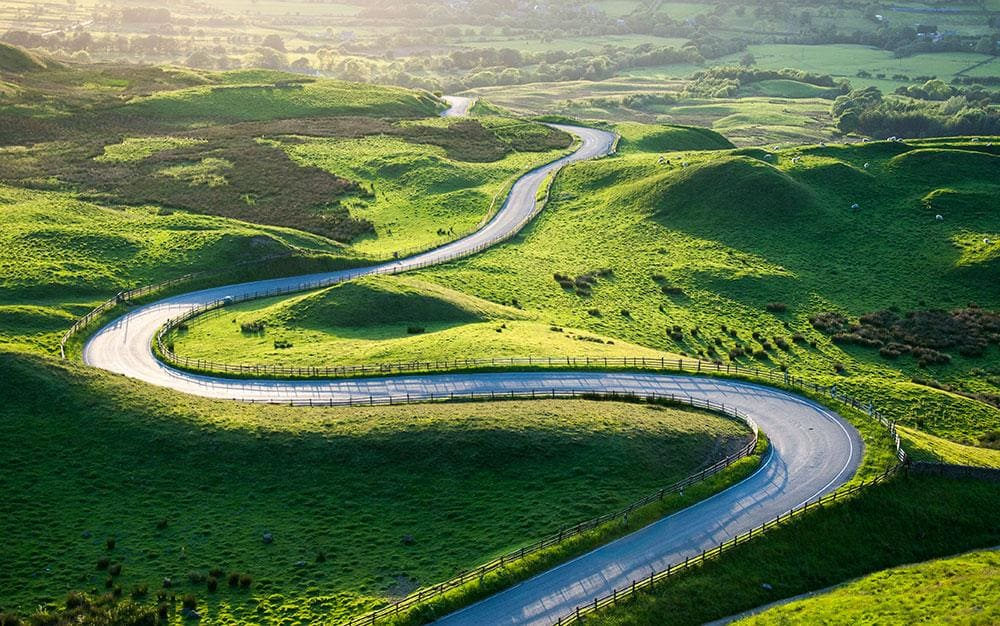
Riding your motorcycle on country roads can be great fun, but sometimes it is hard to predict where the road is actually going. How sharp is that bend? What is coming the other way? Here are a few basic tips to help make your rides safer:
Look ahead , dont look just in front of your bike, or just at the vehicle immediately in front of you. The further you can see, the safer you will be. The vanishing point is simply the furthest point at which you can see the road. In a tight blind bend its often where the verges and hedges seem to blend. If the vanishing point seems to be coming towards you the corner is tightening and you need to reduce your speed. If the vanishing point is moving away from you, the bend is opening up and you can begin to accelerate out. Looking as far up the road as possible means you can predict potental hazards rather than simply reacting!
On a motorbike, your eyes and focus will be constantly flitting between the vanishing point, close up (eg machine controls), middle distance (up and coming junctions and cars) and the far distance.
There are often clues as to what the road will do beyond the vanishing point. Road furniture like lamp posts and telegraph poles, buildings and even large vehicles can be seen over hedgerows on the road ahead. Taking on board these clues and helps with your predictions.
Inexperienced riders often need reminding to look up and ahead. There is a tendency to fixate on the middle distance. Let your eyes search for the furthest possible view ahead and then less is going to surprise you.
For example, knowing a right hander is coming up as soon as it appears allows you to adjust your road positioning early to adopt the ideal line.
Think about the best position on the road for both safety and visbility - Never ever compromise safety to get a better view! On right hand bends your ideal position is towards the left hand side of the road (the outside of the bend) but not in the dirt, so you can see through the bend and into the next corner or straight. For left hand bends this means not being near the centre line - think for a moment of where a tractor or large vehciel coming towards you might be!
These simple rules will enable you to spot, and be spotted, by on coming traffic.

